THE TRIO — THE THREE GATEKEEPERS
Three microbes. One boundary. A very different way of looking at the human body.
There are moments in research when three things that looked unrelated suddenly stop looking unrelated.
That is where this story began.
Akkermansia.
Roseburia.
Faecalibacterium.
THE TRIO — THE THREE GATEKEEPERS
Three microbes. One boundary. A very different way of looking at the human body.
There are moments in research when three things that looked unrelated suddenly stop looking unrelated.
That is where this story began.
Akkermansia.
Roseburia.
Faecalibacterium.
Three names that, at first glance, belong to the enormous and confusing catalogue of organisms living inside the human gut.
Three bacteria among thousands.
Three organisms that appear in microbiome papers, often discussed separately, each associated with some version of “good gut health.”
But the more closely we looked, the harder it became to treat them as three independent characters.
They occupied different positions.
They performed different functions.
They interacted with different parts of the biological environment.
And yet those functions seemed to converge around something much larger:
the body’s ability to maintain a stable relationship with the world outside itself.
That changed the question.
Instead of asking:
What does Akkermansia do?
Then:
What does Roseburia do?
Then:
What does Faecalibacterium do?
we began asking something else:
What happens when these three functions are considered together?
That question led somewhere much more interesting.
Because the gut is not simply a digestive tube.
It is one of the body’s largest interfaces with the outside world.
Food arrives there.
Microbes arrive there.
Foreign molecules arrive there.
Potential pathogens arrive there.
Chemical compounds are transformed there.
Immune decisions are made there.
Nutrients are extracted there.
Signals are generated there.
And between all of that external material and the internal environment of the body sits a living boundary.
A mucus layer.
An epithelial surface.
Immune surveillance.
Microbial communities.
Chemical signals.
And an enormous amount of biological negotiation.
The boundary is not passive.
It is alive.
And this is where the Trio became interesting.
We began to see them not simply as beneficial bacteria, but as three different participants in maintaining the conditions under which that boundary can function.
We eventually started calling them:
The Three Gatekeepers.
Not because they are the only organisms involved.
They aren’t.
Not because one bacterium controls one “gate.”
It doesn’t.
And not because losing them automatically produces one particular disease.
That would be far too simple.
The name came from something more fundamental.
They sit close to the interface.
They help shape the environment around it.
They contribute different pieces of the biological conditions that allow the boundary to remain functional, nourished, chemically active and appropriately regulated.
And when those conditions deteriorate, the consequences do not necessarily remain inside the gut.
They can propagate outward through the biology.
That is the discovery we want to explore here.
FIRST: THERE IS NO SINGLE “GUT BARRIER”
We tend to imagine the gut barrier as a wall.
On one side:
the contents of the intestine.
On the other:
the body.
But biology is rarely that simple.
The intestinal boundary is a layered system.
There is mucus.
There are epithelial cells.
There are junctions between those cells.
There are antimicrobial substances.
There is secretory IgA.
There are immune cells.
There are microbial communities living within and around the mucus.
There are metabolites produced by those microbes.
There are receptors that detect microbial molecules.
There are transport systems moving nutrients across the epithelium.
There are signalling pathways communicating with the immune system.
And there is constant renewal.
The boundary is therefore doing several jobs simultaneously.
It has to allow useful things through.
It has to keep harmful things away.
It has to tolerate enormous numbers of organisms that are not supposed to be treated as enemies.
It has to respond rapidly when genuine danger appears.
And then, critically, it has to stand down again.
That last part matters.
A functioning biological boundary is not one that fights everything.
It is one that can distinguish.
Friend from threat.
Nutrient from danger.
Resident organism from invading organism.
Normal exposure from abnormal exposure.
The body cannot survive by declaring war on everything that enters through the gut.
It has to negotiate.
That is why the word firewall can be useful—but only if we remember that this is a living firewall.
It does not simply block.
It regulates access.
It is a border.
And borders require gatekeepers.
MEET THE FIRST GATEKEEPER
Akkermansia muciniphila
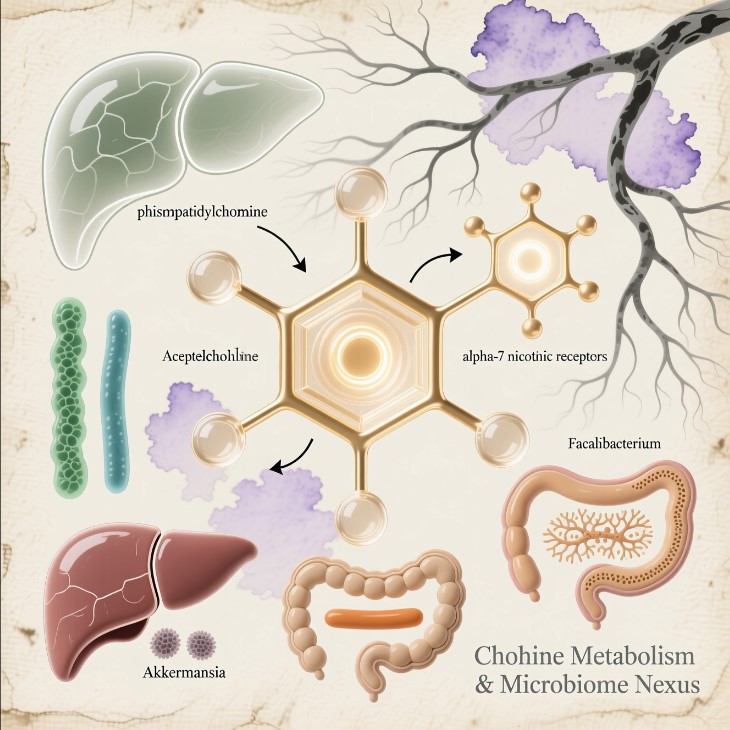
Akkermansia occupies a particularly interesting ecological position because it lives closely associated with the intestinal mucus layer.
The mucus is not just slime.
It is part of the body’s protective architecture.
It creates physical separation.
It provides habitat.
It influences which organisms can live where.
It interacts with immune signalling.
And it helps keep the enormous microbial population of the intestine from being in direct, uncontrolled contact with the epithelial surface.
Akkermansia is specialised in using mucin as a nutrient source.
At first that sounds almost contradictory.
Why would an organism that consumes components of the mucus layer be considered supportive of the mucus environment?
Because ecosystems are rarely that straightforward.
Akkermansia’s relationship with mucin is part of a dynamic ecological process.
It participates in the turnover of the mucus environment and can influence the surrounding microbial community and host–microbe interactions.
In other words, it is not simply sitting there “protecting the wall.”
It is participating in the ecology of the wall.
That distinction matters.
Because the mucus layer is not a static coating that we put on the intestine and hope remains there.
It is continually produced.
Continually modified.
Continually consumed.
Continually renewed.
A living habitat requires a living ecology.
And Akkermansia is one of the organisms associated with that habitat.
This is the first reason we began thinking of it as a Gatekeeper.
It sits at the boundary.
It participates in the environment immediately surrounding the boundary.
And through its interactions with mucus, microbes and host tissues, it helps shape the conditions in which that boundary operates.
THE GATE HAS CHEMISTRY
This is where the story gets deeper.
Because the mucus isn’t simply a physical barrier.
The microbes living within the intestinal environment are constantly transforming molecules.
They ferment substrates.
They produce metabolites.
They consume metabolites produced by other organisms.
They alter the chemical environment around them.
And some of those molecules become biologically important to the host.
This is one of the great conceptual shifts in microbiome biology.
The microbes are not merely passengers living inside us.
They participate in a chemical ecosystem.
The host provides habitat and nutrients.
The microbes transform material.
The resulting molecules influence the host.
The host responds.
That response changes the environment.
The microbes respond again.
It is a feedback system.
And this brings us to the second Gatekeeper.
THE SECOND GATEKEEPER
Roseburia
Roseburia is strongly associated with the production of short-chain fatty acids, including butyrate, through the fermentation of dietary carbohydrates.
Butyrate has become one of the most interesting molecules in the gut–host relationship because it sits at the intersection of several processes.
It can serve as an energy source for colonocytes.
It influences epithelial biology.
It affects immune signalling.
It can influence gene regulation through mechanisms including histone deacetylase inhibition.
It participates in signalling pathways involving host receptors.
And it helps shape the metabolic environment of the colon.
This is important because the intestinal boundary needs energy.
The epithelial layer is not a dead wall.
It is made of living cells that are continually renewed and continually challenged.
They need fuel.
They need oxygen gradients.
They need appropriate signalling.
They need protection from excessive inflammatory activity.
They need the right physical and chemical environment.
Butyrate is one of the molecules that helps connect microbial metabolism with those host requirements.
So Roseburia adds another dimension to the Gatekeeper concept.
Akkermansia is strongly associated with the mucosal habitat.
Roseburia contributes to the chemical and metabolic environment through fermentation and SCFA production.
The gate is beginning to look less like a wall.
It is becoming an ecosystem.
AND THEN WE MEET THE THIRD
Faecalibacterium prausnitzii
Faecalibacterium is another major butyrate-producing organism and is one of the organisms repeatedly associated with a healthier intestinal microbial ecosystem.
It has attracted particular attention because lower abundance has been observed in several inflammatory and gastrointestinal conditions, including inflammatory bowel disease.
But again, we need to be careful.
Association is not the same as causation.
Finding less Faecalibacterium in a disease state does not automatically mean that its disappearance caused the disease.
Disease itself can alter the habitat.
Medication can alter the habitat.
Diet can alter the habitat.
Inflammation can alter the habitat.
Oxygen availability can change.
Transit time can change.
The entire microbial ecosystem can reorganise.
So the interesting question isn’t simply:
“Did Faecalibacterium disappear first?”
The deeper question is:
What does the loss of organisms such as Faecalibacterium mean for the functional environment of the gut?
Here the answer becomes particularly interesting.
Faecalibacterium contributes to butyrate production and is associated with anti-inflammatory effects and interactions with host immune pathways.
The organism therefore occupies another part of the same territory:
microbial metabolism ↔ epithelial health ↔ immune regulation.
Now the pattern is becoming difficult to ignore.
Three organisms.
Three different ecological positions.
And overlapping effects.
THIS IS WHERE THE “TRIO” BECAME SOMETHING DIFFERENT
We could have simply called them:
three beneficial bacteria.
But that doesn’t explain what caught our attention.
The interesting thing is not that each organism is individually useful.
The interesting thing is that their functions appear to occupy complementary territory.
Think about what the gut needs.
It needs a functioning mucus environment.
It needs an intact and properly nourished epithelial surface.
It needs microbial fermentation.
It needs metabolites.
It needs immune tolerance.
It needs controlled inflammatory responses.
It needs constant communication between microbes and host cells.
No single organism does all of that.
But the ecosystem can distribute those functions across different organisms.
That is how biological systems often work.
Not with one master component.
With overlapping and interacting functions.
And this is where the Gatekeeper metaphor becomes useful.
Not three guards standing at three separate doors.
Three participants helping maintain one living border.
THE FIRST BIG DISCOVERY
The Trio isn’t the wall.
The Trio helps create the conditions in which the wall can function.
That distinction is central.
Akkermansia does not “seal your gut.”
Roseburia does not “turn on the nervous system.”
Faecalibacterium does not “prevent inflammation.”
Those statements are too crude.
The biology is more interesting.
These organisms participate in networks involving:
mucus
epithelial cells
microbial metabolites
immune signalling
nutrient availability
host receptors
local inflammatory tone
microbial cross-feeding
and many other processes.
The organism is one part.
The environment is another.
The interaction between them is the real story.
And this is precisely why losing a microbial organism can sometimes have effects far beyond the organism itself.
You are not simply losing a species.
You may be changing the habitat.
And changing the habitat changes who else can survive there.
CROSS-FEEDING: THE GATEKEEPERS DON’T LIVE IN ISOLATION
One of the most important things to understand about the microbiome is that microbes live in communities.
They consume things produced by other microbes.
They produce molecules used by others.
They compete.
They cooperate.
They modify their environment.
They change pH.
They consume oxygen.
They alter substrate availability.
They create ecological niches.
So when one organism changes, another organism may experience an entirely different environment.
This means that microbial depletion can become more than a missing name on a stool report.
It can become ecological restructuring.
A reduction in one functional group can alter the resources available to another.
A change in fermentation can change metabolite availability.
A change in mucus can alter the habitat.
Inflammation can alter oxygen gradients.
And the new environment can favour organisms that were previously kept in check.
This is why the word terrain became so important to us later.
But at this stage, we don’t need the entire terrain model.
We only need to recognise the first principle:
The microbial environment is part of the biological environment.
Change one, and the other can change with it.
WHEN THE GATEKEEPERS DECLINE
Now we can ask the uncomfortable question.
What happens when the ecological conditions supporting organisms such as Akkermansia, Roseburia and Faecalibacterium deteriorate?
There is no single answer.
That is important.
Different people will have different starting conditions.
Different diets.
Different medications.
Different infections.
Different immune states.
Different genetics.
Different microbial ecosystems.
Different histories.
So we shouldn’t expect one identical cascade.
But certain broad changes can occur.
Mucus dynamics can change.
SCFA production can change.
Epithelial metabolism can change.
Microbial composition can shift.
Immune signalling can change.
Barrier integrity can become compromised.
And microbial products that are normally kept away from deeper tissues can gain greater access to the host immune system.
The result is not simply:
“leaky gut.”
That phrase has become almost meaningless through overuse.
The important question is:
What does increased permeability actually expose the body to, and how does the body respond?
That is where the immune system enters the story.
THE BODY DOESN’T SEE A LEAK
It sees information.
The immune system does not receive a message saying:
“The gut barrier is slightly damaged.”
It receives molecular signals.
Microbial products.
Host-derived danger signals.
Changes in metabolites.
Changes in epithelial signalling.
Changes in antigen exposure.
Changes in the chemical environment.
Those signals are interpreted through receptors and signalling networks.
And the response depends on context.
A healthy immune system is not supposed to react maximally to everything.
It has to discriminate.
It has to tolerate enormous quantities of harmless material.
It has to respond strongly to genuine threats.
And it has to switch that response off.
This brings us back to the original Gatekeeper idea.
Because the gut boundary is not merely controlling what gets through.
It is helping control how the body interprets what gets through.
That is a much more powerful concept.
THE CHEMISTRY OF THE GATE
This is where butyrate becomes particularly important.
Butyrate is one of the clearest examples of how microbial metabolism can influence host biology.
It is produced through fermentation of carbohydrates by particular microbial groups.
It can be used by colonocytes as an energy source.
It can influence epithelial barrier function.
It can alter gene expression.
It can influence immune cells.
It can participate in signalling pathways that affect inflammatory responses.
So when a butyrate-producing ecosystem declines, the question isn’t simply:
“Where did the butyrate go?”
The larger question is:
What happens to the biological environment when an important class of microbial metabolites becomes less available?
That is the direction the science takes us.
The gut begins to lose some of the chemical conversation that normally exists between microbial metabolism and host physiology.
And that conversation matters.
THIS IS WHY “GOOD BACTERIA” IS TOO SMALL A CONCEPT
The phrase sounds harmless.
But it actually hides the most interesting part.
Akkermansia isn’t “good” because it is morally good.
Roseburia isn’t “good” because it is a probiotic superhero.
Faecalibacterium isn’t “good” because it magically prevents disease.
They are organisms adapted to particular ecological roles.
Their presence can contribute to particular biological functions.
Their abundance is shaped by the environment.
Their activity is shaped by what is available to them.
And their effects depend upon their interactions with the host and the rest of the microbial ecosystem.
That is much more interesting than “good bacteria.”
It also explains why rebuilding them is not necessarily as simple as swallowing them.
A microbe needs a habitat.
It needs food.
It needs compatible ecological conditions.
It needs other organisms.
It needs appropriate host conditions.
You cannot necessarily restore an ecosystem by dropping one species into an ecosystem that no longer supports it.
That observation will become extremely important later.
But for now, it gives us a warning:
The Gatekeepers cannot simply be treated as isolated ingredients.
THE GATEKEEPERS AND IMMUNE PEACE
There is another part of the story that deserves attention.
The immune system lives beside the microbiome.
Not metaphorically.
Physically.
The intestine contains enormous quantities of microbial material while simultaneously needing to avoid constant destructive inflammation.
That is an extraordinary biological problem.
The body has to live with trillions of organisms.
It has to learn what belongs.
It has to recognise changes.
It has to maintain boundaries.
And it has to remain ready to respond.
Microbial metabolites, including SCFAs, participate in this relationship.
So when the microbial ecosystem becomes disrupted, the immune environment can change too.
The result can be a shift away from tolerance and toward greater inflammatory activity in susceptible circumstances.
This doesn’t mean every microbiome disturbance causes systemic disease.
It doesn’t.
It means the microbiome is one of the biological systems participating in the regulation of the immune environment.
And that is enough to make its collapse important.
Because inflammation itself changes the habitat.
Which changes the microbes.
Which changes the metabolites.
Which changes the immune environment.
The system can begin feeding back upon itself.
THE DIRECTION OF THE SYSTEM CAN CHANGE
This is perhaps the most important concept in the entire first discovery.
A healthy biological system is not necessarily one that is permanently calm.
It is one that can change state appropriately.
Threat appears.
The body responds.
Threat resolves.
The body returns toward regulation.
Food arrives.
The digestive system responds.
Nutrients are absorbed.
The system returns toward baseline.
A microbe changes.
The ecosystem compensates.
A pathogen appears.
The immune system responds.
The threat passes.
The immune response settles.
That capacity to move between states is fundamental.
But if the signals continually favour defence, the body can begin operating differently.
Barrier disruption can increase immune exposure.
Inflammation can alter the microbial environment.
Microbial changes can alter metabolite production.
Those metabolites can influence epithelial and immune function.
And now the altered environment creates conditions favouring further instability.
This is not a single straight line.
It is a feedback system.
And that distinction will matter enormously later.
FROM GUT BIOLOGY TO HUMAN EXPERIENCE
Now we arrive at the part that originally made us stop.
Because all of this sounds molecular.
Mucus.
SCFAs.
Epithelial cells.
Immune receptors.
Metabolites.
But human beings don’t experience those words.
We experience the consequences.
We experience:
calm.
irritability.
energy.
fatigue.
clarity.
brain fog.
comfort.
discomfort.
social ease.
withdrawal.
resilience.
overwhelm.
And this raises an important question.
Could some of what we call emotional state be influenced by the biological state in which the nervous system is operating?
Of course it can.
That much is not controversial.
The brain does not operate independently of the body.
Immune signals influence the brain.
Hormones influence the brain.
Metabolism influences the brain.
Sleep influences the brain.
The autonomic nervous system influences the brain.
The gut communicates with the nervous system.
The nervous system communicates with the gut.
The question is not whether biology influences emotion.
It clearly does.
The more interesting question is:
How much of the emotional experience we consider purely psychological is actually dependent upon the physiological conditions in which the brain is attempting to operate?
That question became unavoidable for us.
THE EXPERIENCE OF NOT FEELING SAFE
There is a particular human experience that is difficult to describe.
You can be surrounded by people who love you.
You can know intellectually that you are safe.
You can understand that someone cares about you.
And yet something inside you does not respond normally.
Connection feels distant.
Comfort doesn’t land properly.
You become easily overwhelmed.
Small events provoke disproportionate responses.
You withdraw.
You become irritable.
You feel numb.
Or you simply don’t seem to have access to the emotional range you once had.
It is tempting to explain such experiences entirely through psychology.
Sometimes psychological explanations are absolutely relevant.
Trauma matters.
Relationships matter.
Learning matters.
Environment matters.
Mental health matters.
But none of that means biology is irrelevant.
The nervous system requires a functioning body.
And the body provides the physiological context in which emotional processing occurs.
This is where the Trio becomes emotionally significant.
Not because three bacteria “make love.”
That is not the claim.
The deeper idea is this:
The capacity to experience connection depends upon a biological system capable of regulating threat, maintaining energy, communicating internally and allowing the nervous system to move out of defensive states.
If that biological environment becomes chronically disturbed, the subjective experience can be profoundly different.
And that difference can be mistaken for personality.
Or weakness.
Or bad behaviour.
Or emotional failure.
Sometimes it may simply be a person experiencing the world from a body that is not operating under the same conditions as a regulated body.
THIS IS WHERE THE OLD NAME “LOVE BACTERIA” CAME FROM
We originally called them the Love Bacteria because the emotional observation was so striking.
The name was deliberately provocative.
It captured something that conventional descriptions of microbiome function often leave out.
A person isn’t interested in SCFAs because they want to memorise a metabolic pathway.
They want to know:
Why do I feel like myself again?
Why can I laugh?
Why can I sleep?
Why can I tolerate people?
Why does food stop making me feel terrible?
Why do I feel less threatened by everything?
Why can affection actually reach me?
Why does the world feel less hostile?
Those are human questions.
And the biology can sit underneath them.
But as our understanding developed, Love Bacteria became too small and too sentimental a name for what we were actually discovering.
They are not simply about emotion.
They participate in the physical infrastructure upon which many other systems depend.
So we changed the name.
The Trio.
And then:
The Three Gatekeepers.
WHY THREE?
The number three isn’t magic.
There are thousands of organisms involved in the gut ecosystem.
Many other organisms contribute to mucus dynamics.
Many produce SCFAs.
Many influence immune signalling.
Many participate in bile acid metabolism.
Many interact with the host.
So why focus on these three?
Because they gave us a useful functional pattern.
Akkermansia brought us to the mucosal boundary.
Roseburia brought us to fermentation and butyrate.
Faecalibacterium brought us deeply into inflammatory regulation and immune ecology.
Different organisms.
Different capabilities.
Overlapping territory.
And together they forced us to stop thinking of the microbiome as a collection of species and start thinking about it as a functional ecosystem.
That was the real discovery.
The species names were the doorway.
The system was what was behind it.
WHEN THE GATEKEEPERS ARE LOST
We should also ask the obvious question.
Why would organisms like these decline?
There is no single answer.
And this is another place where the old material was too confident.
Modern life contains many potential pressures on the microbiome.
Antibiotics can dramatically alter microbial communities.
Diet can alter the availability of fermentable substrates.
Illness can change the intestinal environment.
Inflammation changes microbial habitat.
Changes in transit time alter ecological conditions.
Stress and physiological state can influence gut function.
Early-life events can influence microbial colonisation.
Medications can alter microbial composition or metabolism.
And the effects can interact.
The important point isn’t that one particular modern exposure “kills the Trio.”
The important point is that:
microbial ecosystems respond to their environment.
Change the environment repeatedly enough, and the ecosystem changes.
Sometimes it can recover.
Sometimes it reorganises.
Sometimes particular organisms struggle to return.
And sometimes the ecosystem can settle into a different stable state.
That is why “just add probiotics” is such an incomplete answer.
The question is not only:
Can we introduce an organism?
It is:
Can we restore the conditions that allow its function to persist?
THE GATEKEEPER PROBLEM
This gives us a different way of thinking about microbial depletion.
Imagine a forest.
You discover that three species of tree have become rare.
You could plant those trees again.
But if the soil has changed, the water has changed, the fungal network has changed, the grazing pressure has changed and the surrounding ecosystem has changed, planting the trees is only one part of the problem.
The same principle can apply to microbial ecology.
The organism is important.
But the habitat is equally important.
Akkermansia needs an appropriate mucosal environment.
Butyrate producers need substrates.
Microbial communities depend upon cross-feeding.
The host environment determines which organisms can flourish.
And inflammation itself can alter that environment.
So restoration is not simply about replacing missing names.
It is about restoring function and habitat.
This is why the Gatekeeper discovery ultimately became much bigger than a probiotic story.
THE BODY HAS A BORDER
Every living organism has a fundamental problem.
It must remain itself while constantly exchanging matter and information with its environment.
Humans are not sealed containers.
We eat.
We drink.
We breathe.
We touch.
We inhale particles.
We encounter microbes.
We absorb nutrients.
We eliminate waste.
We exchange molecules constantly.
Life therefore requires a boundary that is simultaneously:
open and selective.
It cannot be completely closed.
It cannot be completely open.
It must discriminate.
The gut is one of the most extraordinary examples of this problem.
The intestinal contents contain an enormous microbial ecosystem, yet the deeper tissues of the body must remain protected from uncontrolled exposure.
That requires physical structure.
Chemical regulation.
Immune discrimination.
Microbial ecology.
And constant repair.
The Gatekeepers belong inside that story.
Not as the entire story.
But as important participants in it.
AND THAT CHANGES HOW WE THINK ABOUT “LEAKY GUT”
The phrase has become so popular that it can sound almost trivial.
But intestinal permeability is not a single switch.
Barrier function is dynamic.
It changes with inflammation.
It changes with epithelial health.
It changes with microbial metabolites.
It changes with diet and other environmental factors.
It changes with disease.
And when barrier function is altered, the consequences depend on what else is happening at the same time.
That is why we shouldn’t say:
leaky gut causes everything.
Instead:
Barrier dysfunction can change the information reaching the immune system and therefore change the biological environment in which the rest of the system operates.
That is a much more useful statement.
And it brings us back to the Gatekeepers.
Because if the microbial community helps maintain the environment around the boundary, then microbial disruption may not simply be a consequence of illness.
It can become part of the mechanism that helps maintain the altered state.
THE GATE IS A DIALOGUE
Perhaps this is the simplest way to understand the discovery.
The gut is not a wall.
It is a conversation.
The host says:
Here is mucus.
The microbes respond:
Here is what we can live on.
The microbes produce metabolites.
The host responds:
Here is how those molecules influence our cells.
The immune system detects microbial material.
The tissue says:
This is normal. Remain tolerant.
Or:
This pattern is dangerous. Respond.
The epithelial cells are damaged.
Repair mechanisms activate.
The microbial environment changes.
The ecosystem adapts.
And the conversation continues.
The Gatekeepers are participants in that conversation.
Akkermansia participates strongly in the mucus-associated environment.
Roseburia contributes to fermentation and SCFA production.
Faecalibacterium contributes to fermentation and immune-modulating ecology.
They are not the whole conversation.
But they are important voices within it.
And when enough voices disappear, the conversation changes.
FROM PEACE TO DEFENCE
This may be the most important biological contrast we can draw at this stage.
A well-regulated gut environment supports a state in which:
the barrier is maintained,
nutrients are processed,
microbial metabolites are available,
immune tolerance can operate,
repair continues,
and the organism can devote resources to normal functions.
When the environment becomes chronically disturbed, more resources may be directed toward:
defence,
repair,
inflammatory signalling,
threat detection,
and compensation.
That does not mean the body has “chosen” illness.
It means physiology responds to information.
And the information reaching the system matters.
This is one of the ideas that would eventually become central to our later work.
But we don’t need the later model yet.
For now, it is enough to see that the same organism can operate under very different biological conditions depending upon what the surrounding system is telling it.
AND THAT MAY BE WHY THE EMOTIONAL STORY MATTERS SO MUCH
The body doesn’t separate everything into neat categories.
There is no biological department labelled:
GUT
another labelled:
IMMUNE SYSTEM
another labelled:
EMOTION
another labelled:
BEHAVIOUR
The divisions are useful for studying biology.
They are not how biology actually operates.
A person experiences one organism.
When the gut changes, the immune system can respond.
When inflammation changes, the nervous system can respond.
When metabolism changes, energy changes.
When autonomic regulation changes, emotional experience can change.
And when emotional experience changes, behaviour changes.
The direction can run both ways.
That is why we became interested in the phrase:
safe enough to love.
Not because bacteria manufacture love.
But because feeling safe is not purely an idea.
It is also a physiological state.
The nervous system has to be capable of regulation.
The organism has to have sufficient metabolic and physiological stability.
Threat signalling has to be appropriately controlled.
Sensory information has to be processed.
The body has to be able to move away from defence.
And the brain has to operate within that environment.
If those conditions deteriorate, emotional life can change with them.
That doesn’t make emotion fake.
It makes emotion embodied.
THE HUMAN BEING INSIDE THE MICROBIOME
This is where the story becomes uncomfortable.
We have become very good at dividing human suffering into categories.
Digestive.
Neurological.
Psychological.
Psychiatric.
Immune.
Hormonal.
Behavioural.
But the organism itself does not respect those categories.
A person can have digestive problems and sleep problems.
Then anxiety.
Then sensory sensitivity.
Then fatigue.
Then inflammatory symptoms.
Then emotional instability.
We tend to assign each symptom to a different specialist.
But the biological system may not be experiencing six unrelated problems.
It may be experiencing one changing environment expressed through multiple systems.
That doesn’t mean there is one cause.
It doesn’t mean every illness has a microbial origin.
It doesn’t mean diagnoses are meaningless.
It means we should be willing to look for shared biological infrastructure.
And the Gatekeepers gave us one place to look.
THE FIRST QUESTION WAS NOT “HOW DO WE CURE IT?”
It was much simpler.
What disappeared?
And then:
What function did it perform?
And then:
What happened to the environment when that function was reduced?
That sequence is important.
Because once you start with the diagnosis, you can spend years trying to explain why a named disorder has dozens of apparently unrelated symptoms.
But if you start with function, another picture can emerge.
Mucosal function.
Metabolic function.
Immune regulation.
Barrier integrity.
Microbial chemistry.
Communication.
These functions are not diseases.
They are biological processes.
And diseases can emerge when those processes become persistently disrupted.
That is the direction in which our investigation began to move.
THE TRIO IS NOT THE ANSWER
This needs to be said clearly.
The Trio is not a magic key.
It is not a universal explanation for autism.
It is not a universal explanation for ADHD.
It is not the explanation for every inflammatory disease.
It is not a replacement for genetics, infectious disease, nutrition, psychology, developmental biology or conventional medicine.
And finding reduced abundance of these organisms does not prove that their loss caused a person’s illness.
Those distinctions matter.
Because the deeper discovery is actually more interesting than a miracle-bacteria story.
The Trio gives us a functional lens.
It asks us to look at:
the boundary,
the habitat,
the chemistry,
the immune environment,
and the communication between them.
That is a much larger question.
THREE GATEKEEPERS
So let’s return to the three.
AKKERMANSIA
At the mucosal interface.
Associated with mucus ecology, epithelial interactions and metabolic signalling.
A reminder that the physical boundary is a living habitat.
ROSEBURIA
Within the fermentative ecosystem.
A contributor to butyrate and other microbial metabolites.
A reminder that the boundary has chemistry and that microbial metabolism feeds directly into host biology.
FAECALIBACTERIUM
A major member of the butyrate-producing community and strongly associated with immune-regulated intestinal environments.
A reminder that the boundary is also an immune negotiation zone.
Three organisms.
Three functional perspectives.
One biological territory.
The border between the outside world and the inside world.
AND THIS IS WHERE THE STORY REALLY BEGINS
Because once you see the gut as a living interface, another question becomes unavoidable.
If the Gatekeepers influence the environment of the intestinal boundary…
what happens downstream when that environment changes?
Where does the information go?
What happens to the liver receiving blood from the intestine?
What happens to bile and microbial metabolism?
What happens to the immune system?
What happens to systemic inflammatory signalling?
What happens to the nervous system?
What happens to autonomic regulation?
What happens to the way a person experiences their own body?
Those are the next questions.
We did not know all of those answers when we first found the Trio.
We were following the trail.
One function led to another.
One system revealed another system.
The deeper we looked, the less useful it became to think of organs as isolated machines.
But that is the next part of the story.
For now, stay at the gate.
Because the gate is where the discovery began.
THE SIMPLEST WAY TO SEE THE TRIO
Imagine the intestinal boundary as a living border.
Not a concrete wall.
A border with infrastructure.
Akkermansia helps us understand the mucosal habitat.
Roseburia helps us understand the metabolic chemistry produced by the microbial community.
Faecalibacterium helps us understand the relationship between microbial metabolism and inflammatory regulation.
Together, they point toward a principle:
A healthy boundary is not maintained by structure alone. It is maintained by ecology, chemistry and regulation working together.
And when those systems become disrupted, the consequences can extend beyond digestion.
That is the first Gatekeeper discovery.
THE QUESTION WE COULDN’T STOP ASKING
What if some of the things we experience as symptoms are actually signals that the boundary has been struggling for a long time?
What if irritability isn’t always simply temperament?
What if emotional fragility isn’t always simply psychology?
What if brain fog isn’t merely “in your head”?
What if the inability to settle is sometimes connected to a body that has become biologically difficult to settle?
What if the feeling of being disconnected is sometimes accompanied by a physiological system that is struggling to maintain regulation?
These questions don’t invalidate psychology.
They don’t invalidate psychiatry.
They don’t invalidate neurological diagnoses.
They don’t reduce a person to their microbiome.
They simply put the body back into the conversation.
And that may be one of the most important things the microbiome has taught us.
WE CALLED THEM THE LOVE BACTERIA.
Now we call them something else.
The Three Gatekeepers.
Because the more we learned, the less we believed that their importance could be reduced to emotion.
They are involved in a much more fundamental problem:
how a human body maintains its boundary with the world.
The mucus.
The epithelium.
The microbial habitat.
The metabolites.
The immune system.
The inflammatory threshold.
The chemical environment.
The ability to tolerate.
The ability to respond.
The ability to return toward regulation.
And somewhere downstream of all of that sits a human being.
A human being who doesn’t experience “butyrate.”
They experience energy.
They don’t experience “mucosal integrity.”
They experience a body that feels settled—or doesn’t.
They don’t experience “immune tolerance.”
They experience whether the world feels manageable.
They don’t experience “microbial ecology.”
They experience themselves.
That is why this matters.
Not because three bacteria explain the human condition.
But because three bacteria forced us to look at the human condition differently.
THE FIRST GATE
The first gate is physical.
The second is chemical.
The third is biological regulation.
But the three are not really separate gates.
They are parts of one living boundary.
And when the boundary works, the body can devote itself to more than defence.
It can digest.
Absorb.
Repair.
Learn.
Sleep.
Explore.
Connect.
Respond.
Recover.
When the boundary becomes persistently disturbed, the biological priorities can change.
The organism may begin spending more of its resources managing threat, repairing damage and compensating for instability.
And when the body’s priorities change, the person can feel different.
That is the piece we could not ignore.
Because eventually the microbiology leads somewhere very human.
To the question of what it means to feel safe.
To feel connected.
To have emotional range.
To be able to receive affection rather than simply understand it intellectually.
To feel like yourself again.
We are not claiming that the Trio creates those experiences.
We are saying something more modest—and perhaps more important:
Those experiences require a biological organism capable of supporting them.
And the microbiome is part of that organism.
THIS IS THE GATEKEEPER HYPOTHESIS
Not:
Three bacteria cause disease.
Not:
Three bacteria create happiness.
Not:
Restore three organisms and everything returns to normal.
Instead:
Akkermansia, Roseburia and Faecalibacterium represent complementary microbial functions situated around one of the body’s most important biological interfaces. Their loss may therefore matter not only because three species have declined, but because the ecological, metabolic and immune functions associated with them can become disrupted together.
That is the hypothesis.
And it is a much bigger question than probiotics.
It asks whether microbial ecology can alter the conditions under which the human organism maintains its boundaries, regulates its immune responses and communicates internally.
And if the answer is yes—even partially—
then the consequences are enormous.
Because the gut was never merely about digestion.
It was one of the places where the outside world met the inside world.
And perhaps the first thing we needed to understand was not what was making us sick.
It was:
Who was standing at the gate?
Akkermansia.
Roseburia.
Faecalibacterium.
The Trio.
The Three Gatekeepers.
And this is only the beginning.