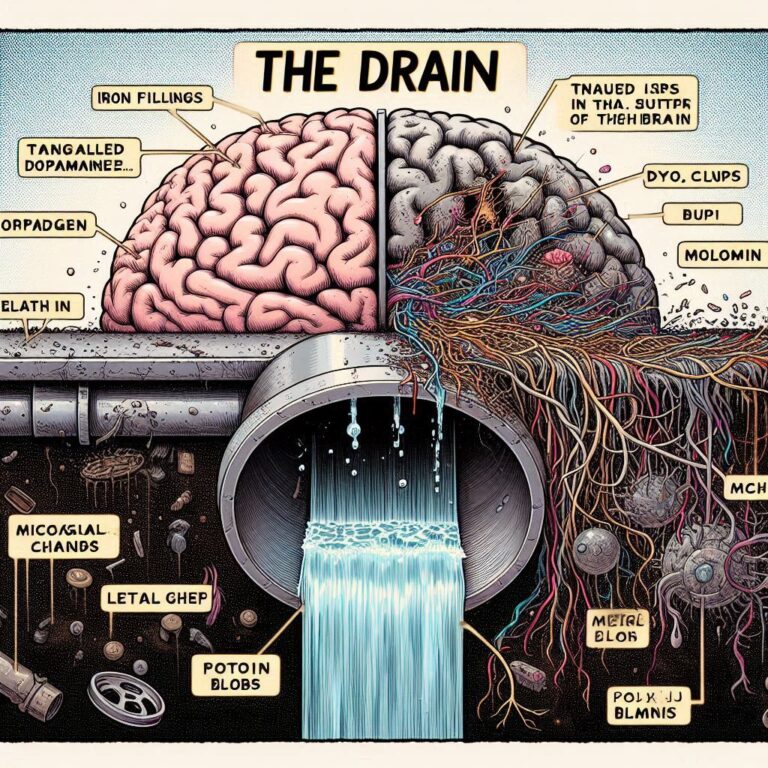
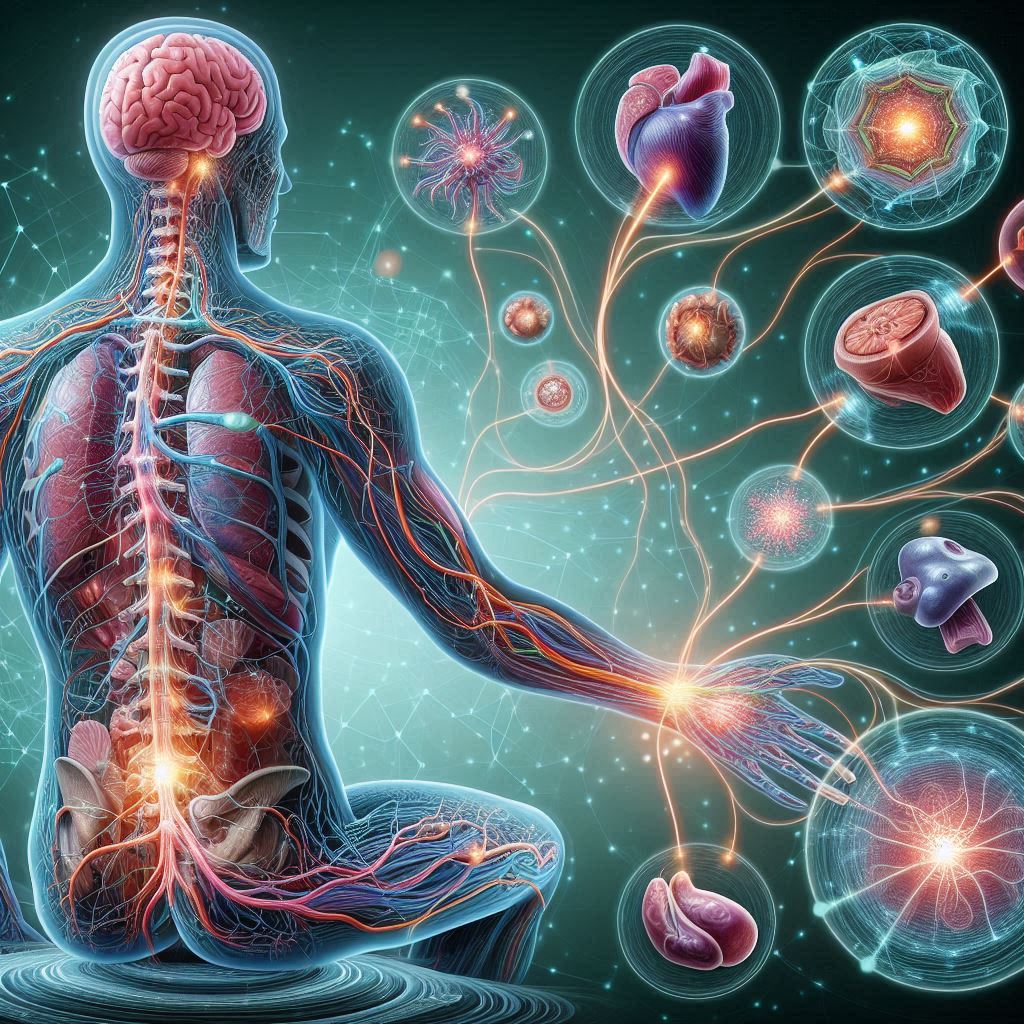
SBS (secondary biological state) Observing how biological routing collapses
What the biology looks like when you stop treating the pathways as separate subjects and look at them through the SBS lenses.
Imagine the body not as a collection of independent chemical factories, but as a living network that constantly has to maintain three things at once: intact boundaries (so the inside stays distinct from the outside), a clear sense of what belongs where (identity), and the ability to clear out what is no longer useful or has become toxic. At the same time it has to keep information and material flowing (throughput), correct problems without bankrupting itself (correction cost), and avoid getting stuck repeating the same broken pattern (replication). When those capacities stay flexible, the system can adapt. When they narrow and lock, the same restricted configuration starts showing up in many different tissues and disease labels.
That is the picture that emerges when you put serotonin, kynurenine, thyroid hormone, glutathione, nitric oxide, methylation, mitochondria, bile acids, and polyamines on the same table.
BIC — Boundary, Identity, Clearance
Several of the pathways sit right on the boundary between the host and the microbial world, and they help decide what is allowed to pass, what is recognised as self, and what gets cleared.
The gut lining and its mucus layer are a living boundary. Secondary bile acids and short-chain fatty acids produced by certain microbes help keep that boundary tight and the mucus healthy. Serotonin made in the gut wall also participates in motility and local signalling that supports barrier function. When those microbial functions thin out, the boundary becomes leakier. At the same time, the kynurenine pathway (especially when inflammation turns on IDO) and nitric oxide production shape immune “identity” — deciding which signals are tolerated and which trigger defence. Glutathione and the broader redox system are major clearance tools: they neutralise reactive molecules so they do not damage membranes or DNA. Thyroid hormone and mitochondrial activity influence how quickly cells turn over and how effectively damaged material is removed.
When any of these falter, you often see the same three failures appear together: the boundary becomes more permeable, the immune system starts reacting to things it used to ignore (loss of clear identity), and clearance slows so intermediate metabolites and oxidative by-products accumulate. One failure rarely stays isolated; it tends to compromise more than one BIC dimension at once.
TCVG — Trio, Choline, Vagus, Glymphatic
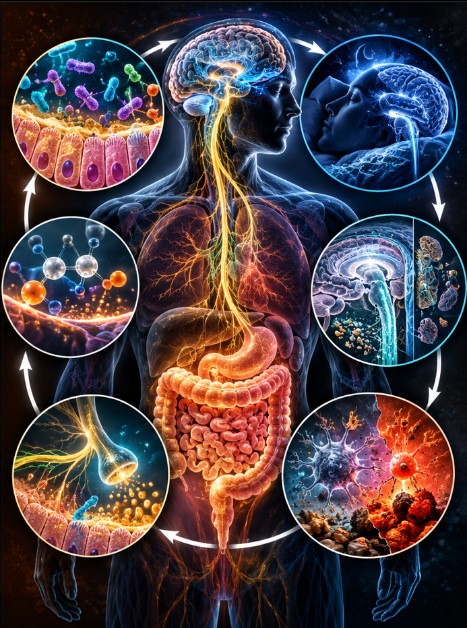
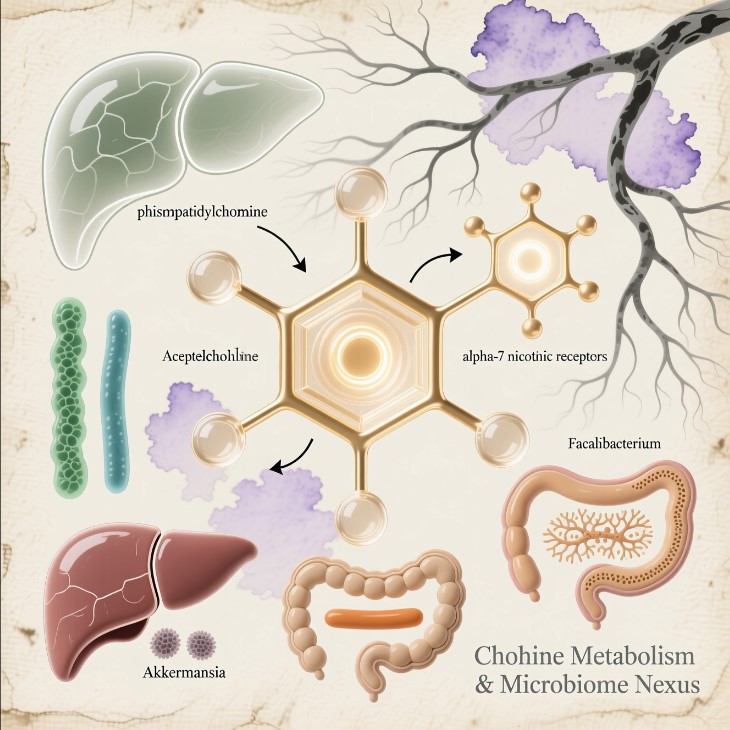
The “Trio” idea (mucus-associated microbial ecology as a measurable indicator of broader biome–host communication) shows up clearly. Certain microbes (spore-formers, Akkermansia-like organisms, bile-acid transformers) do not just sit there; they actively tune host serotonin production, bile-acid signalling, and short-chain fatty acid output. Those outputs talk to the host through the vagus nerve and through circulating metabolites that reach the brain. Sleep and glymphatic clearance (the brain’s overnight waste-removal system) are influenced by the same network: melatonin is downstream of serotonin, and mitochondrial and redox health affect how well the brain can clear during deep sleep. Choline sits in the middle of this — it is needed for membrane phosphatidylcholine (boundary integrity), for acetylcholine (vagal and cognitive signalling), and it feeds into methylation. When choline economy is strained, membranes, neurotransmission, and methylation all feel it.
So the pathways are not separate from TCVG; several of them are the biochemical language through which the microbial community, the vagus, and clearance systems speak to one another.
CTR — Correction Cost, Throughput, Replication
This is where the picture becomes especially sharp. Healthy systems keep multiple routes open and can switch between them with relatively low cost. Diseased configurations often show the opposite: fewer usable routes, higher cost to keep the remaining ones running, and a tendency to keep reproducing the same restricted state.
Look at tryptophan. Under calm conditions it can go to serotonin or to kynurenine or be used by microbes. Under chronic inflammation the IDO gate opens wide, most tryptophan is forced down the kynurenine road, serotonin production drops, and the system now depends on a narrower set of options. Restoring the original flexibility requires more resources (and often fails while the inflammatory signal continues). The same pattern appears with BH4: when oxidative stress oxidises it faster than it can be recycled, the enzymes that make serotonin, catecholamines, and nitric oxide all lose capacity at the same time, and the nitric oxide synthases start making superoxide instead. The system is now locked into a high-cost, low-output mode. Methylation shows it too: when demand for methyl groups is high or cofactors are short, the SAM:SAH ratio falls, methylation reactions slow, and the system has fewer ways to mark genes, make membranes, or process neurotransmitters. Correction becomes expensive.
Mitochondria and glutathione amplify the cost. Damaged mitochondria produce more reactive oxygen species, which further oxidise BH4 and consume glutathione, which further impairs energy production. The system is spending more and more just to stay in the same restricted state. That is high correction cost and low throughput, and the configuration tends to replicate itself across days and tissues.
Amino Acid and Peptide Grammar
Healthy systems appear to keep amino-acid pools and pathway choices relatively diverse and reversible. Restricted systems start reusing the same limited motifs. Tryptophan is forced into one dominant channel. Arginine is competed for by nitric oxide, polyamines, and the urea cycle, and under stress one or two of those win consistently. Cysteine is pulled hard toward glutathione at the expense of other uses. The enzymes themselves begin to favour certain substrates or become constitutively induced (IDO is a clear example). The “grammar” of the chemistry becomes less flexible — fewer possible sentences, more repetition of the same restricted phrases. This shows up in metabolomic signatures across neurological, inflammatory, and metabolic conditions even when the end-organ labels look different.
Regulatory Lock
This is the unifying observation. Many of the pathways can enter a self-reinforcing restricted state:
- Inflammation induces IDO → tryptophan is diverted → serotonin falls and kynurenine metabolites rise → immune and neural tone stay altered → inflammation is harder to resolve.
- Oxidative stress oxidises BH4 → nitric oxide production falls and superoxide rises → more oxidative stress → BH4 stays low.
- Microbial loss of key functions (bile-acid transformers, short-chain fatty acid producers, certain polyamine producers) reduces the signals that normally keep host serotonin, barrier, and metabolic enzymes in a flexible range → the host enzymes stay in the narrowed expression pattern.
- Methylation and redox constraints feed each other: low glutathione or high demand for cysteine pulls resources away from methylation, and poor methylation impairs the cell’s ability to regulate the very enzymes that control redox.
Once these loops close, simply adding more of a single substrate often does little, because the system is no longer configured to use it the original way. Recovery requires opening multiple gates at once — reducing the inflammatory drive, restoring redox capacity so BH4 can be recycled, re-introducing the microbial functions that send the right signals, and supporting the cofactors that keep the remaining enzymes flexible. That is why single-molecule or single-pathway approaches so often plateau.
The larger picture
What the combined evidence shows is not that every disease begins in the gut or that one cofactor explains everything. It shows that a relatively small set of shared resources and decision points (tryptophan partitioning, BH4 redox state, cysteine/glutathione capacity, SAM availability, key microbial functional guilds, iron and selenium status, mitochondrial integrity) sit at the crossroads of many pathways. When those nodes stay flexible, the system can route material and information in many directions and recover from insults. When they narrow and the feedback loops close, the same restricted operating state appears under different disease names.
That is the “monumental” pattern the mining surfaced: not a single new pathway, but the repeated observation that loss of metabolic flexibility and the emergence of self-reinforcing restricted configurations cut across the classical silos. The biology itself is already integrated. The silos were the artificial part.
That is the “monumental” pattern the mining surfaced: not a single new pathway, but the repeated observation that loss of metabolic flexibility and the emergence of self-reinforcing restricted configurations cut across the classical silos. The biology itself is already integrated. The silos were the artificial part.
1. The central discovery: biology has shared bottlenecks
The shared biochemical hubs
BH4
Tryptophan hydroxylase · Tyrosine hydroxylase · Nitric oxide synthases
A shared dependency connecting serotonin, catecholamines and nitric oxide.
NADPH
Glutathione recycling · Nitric oxide synthesis · Redox maintenance
A shared reducing resource connecting antioxidant capacity and signalling.
Tryptophan
Serotonin · Kynurenine · Microbial indoles
One substrate, several competing destinations, each with different biological consequences.
SAM
Methylation · Catecholamine clearance · Polyamine synthesis · Membrane metabolism
A shared methyl-donor economy with competing demands.
Arginine
Nitric oxide · Polyamines · Urea cycle
A substrate whose allocation can change vascular, immune and cellular-repair functions.
Iron, selenium and B vitamins
Enzyme activity · Redox protection · Thyroid metabolism · Mitochondrial function
Resource dependencies that cross several otherwise distinct systems.
Microbial functions
SCFAs · Secondary bile acids · Indoles · Polyamines · Nitrate reduction
Microbial metabolic functions that can influence multiple host pathways simultaneously.
These shared nodes are identified in Frik’s integration register.
A biological system doesn’t necessarily need nine independent failures to produce nine different functional disturbances. A constraint at a shared node can affect several pathways at once.
That is a much more powerful question than simply asking whether a particular metabolite is low.
What happens to the whole network when a shared resource becomes constrained, diverted, oxidised, poorly recycled or unavailable to the tissue that needs it?
That is a proper SBS question.
2. The most revealing example: tryptophan is not one pathway
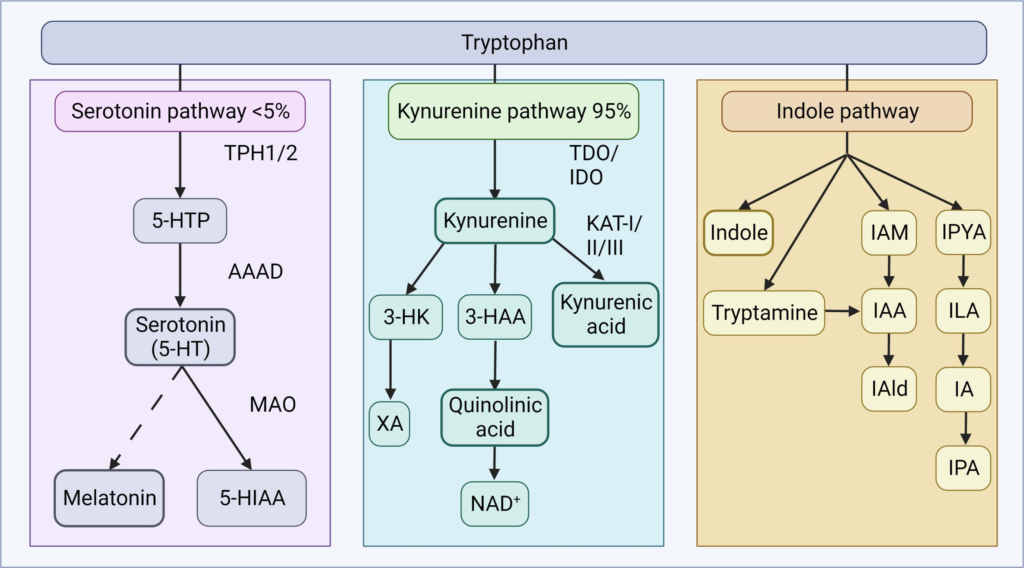
Tryptophan can be directed into at least three broad destinations:
- Serotonin and melatonin: neural, gastrointestinal and circadian signalling.
- Kynurenine metabolism: immune regulation, neuroactive metabolites and a route contributing to NAD+ synthesis.
- Microbial metabolism: indoles, tryptamine and other compounds that interact with host signalling.
The important point is that these destinations are not independent. Inflammation can induce IDO activity and change tryptophan allocation. Microbes can consume tryptophan or produce metabolites that influence the host. The availability of substrate, the enzymes processing it and the surrounding immune environment all matter.
This identifies the possibility of an inflammation-associated pattern in which tryptophan is increasingly directed through kynurenine metabolism, while serotonin-related functions are altered. He also identifies the KYNA/QUIN balance as important.
This is particularly useful for our amino acid grammar work.
We have been looking at the difference between a biological system having access to a building block and being able to use it flexibly. Here we have a concrete biochemical example of allocation.
The same input can support different biological outcomes depending on which enzymes are active, what the system needs, and what regulatory conditions prevail.
That is not yet proof of a universal disease lock. But it gives us something measurable to investigate: substrate-to-product ratios, pathway flux, and whether the system can change its allocation when conditions change.
3. BH4 may be one of our most important convergence points
This is the finding I would put near the top of our research board.
BH4 is required by:
- Tryptophan hydroxylases — serotonin synthesis.
- Tyrosine hydroxylase — catecholamine synthesis.
- Nitric oxide synthases — nitric oxide production.
It is therefore a biochemical bridge between neurotransmitter production and vascular, immune and other nitric-oxide-dependent functions.
There is an additional relationship: when NOS becomes uncoupled, it can produce superoxide rather than normal nitric oxide output. Oxidative stress can also affect BH4 availability and recycling.
That creates a potentially reinforcing relationship:
Oxidative / inflammatory pressure
BH4 oxidation or impaired recycling
Serotonin
Hydroxylation
Catecholamines
Hydroxylation
Nitric oxide
NOS coupling
Multiple signalling systems potentially affected
Conceptual dependency map, not a demonstrated universal sequence.
There is an important distinction here: BH4 is not simply a dietary nutrient that gets used up. It is synthesised and recycled by the host, and its redox state matters. The precise regulation of its synthesis, oxidation and recycling needs to be mapped separately.
But the convergence itself is real biochemistry.
For SBS, this is exactly the sort of node worth investigating because it has multiple downstream dependencies.
4. The microbiome findings are more substantial than a simple diversity argument
This report reinforces something we’ve repeatedly tried to make clear: the biome is not just a list of organisms.
It is a collection of metabolic functions.
,has identified several microbial functions with potential reach across multiple systems:
| Microbial function | Host systems it can influence |
|---|---|
| SCFA production | Gut barrier, serotonin, immune regulation, energy metabolism |
| Secondary bile acid production | Serotonin, FXR/TGR5 signalling, metabolism |
| Tryptophan transformation | Indole/AhR signalling, substrate allocation |
| Polyamine production | Cell growth, epithelial repair, autophagy |
| Nitrate reduction | Nitric oxide availability |
| Bile deconjugation | Bile recycling and potentially thyroid hormone handling |
This matters enormously for how we describe the Trio.
The Trio is not the whole biome and does not need to perform every one of these functions. Its value in our framework is as a measurable indicator of the state of the wider biome and the condition of bidirectional communication.
The next research question is therefore not simply: Which bacteria are missing?
It is:
Which biochemical functions have become unavailable, diminished, redirected or disconnected from host regulation — and can we measure their return?
That moves us towards functional microbiome analysis rather than relying on taxonomic abundance alone.
5. The other major discovery: the system has competing economies
This is where the report starts becoming especially useful for CTR.
Several pathways share resources and compete for them.
Consider:
- Methionine supplies the methylation cycle, while SAM also supports polyamine synthesis and catecholamine methylation.
- Cysteine is needed for glutathione, but its supply is connected to transsulfuration and methionine metabolism.
- Arginine can be used by NOS, arginase and polyamine-related pathways.
- Tryptophan can be directed into serotonin, kynurenine or microbial products.
- NADPH supports glutathione recycling and other reductive processes, including NOS activity.
This is not just a question of deficiency.
A system may have a substrate available, but its allocation may have changed. One pathway may be favoured at the expense of another. A compensatory response may preserve one function while compromising a different one.
That gives us a more precise way of examining biological rigidity.
For example, a high demand for glutathione under oxidative pressure may change the availability of cysteine for other purposes. A change in SAM utilisation may affect both methylation and polyamine production. Those are not necessarily failures of synthesis; they can be consequences of competing demands.
CTR could give us a way to ask what it costs the system to maintain one function at the expense of another, and whether it can recover its former flexibility.
That’s a meaningful extension of the Correction Cost–Throughput–Replication idea.
6. How this fits the SBS architecture
I think we can now see a larger structure emerging.
The original source-to-host model was:
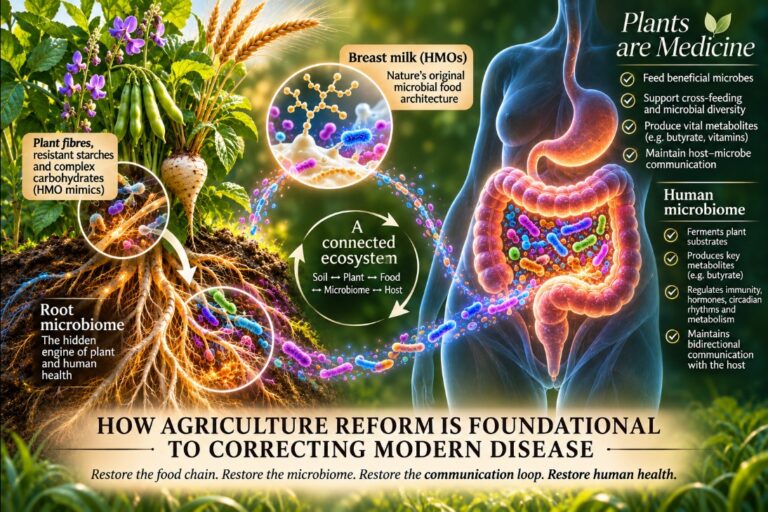
Environmental inputs → food chemistry → microbial activity → digestion and absorption → host substrates → enzyme operation → cellular function.
Frik’s findings allow us to extend it. We now have several interacting layers rather than one chain.
The expanded SBS dependency architecture
1. SOURCE INTEGRITY
Soil · plants · food chemistry · environmental exposures
2. BIOME FUNCTION
Production · transformation · competition · signalling
3. HOST INPUT AND PROCESSING
Digestion · absorption · transport · substrate allocation
4. SHARED BIOCHEMICAL ECONOMIES
Cofactors · redox · methylation · amino acids · energy
5. ENZYME AND PATHWAY OPERATION
Synthesis · conversion · diversion · recycling · clearance
6. REGULATORY SYSTEMS
Neural · immune · endocrine · vascular · circadian
7. TISSUE FUNCTION AND RECOVERY
Boundary · identity · clearance · repair · metabolic flexibility
FEEDBACK AND REGULATORY LOCK
Inflammation · oxidative pressure · altered microbial activity · persistent pathway allocation
Notice what has changed.
We are no longer only asking whether the boundary has failed, whether microbial composition has changed, or whether a neurotransmitter is deficient.
We can now ask whether the system has lost the ability to coordinate its resource allocation across multiple functions.
That is a much broader question about biological regulation.