The Secondary Biological State (SBS) Hypothesis
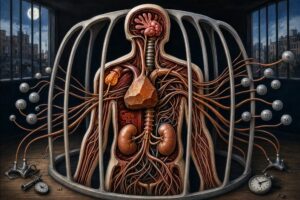
The Secondary Biological State (SBS) Hypothesis
A systems-level hypothesis of altered biological function, constrained recovery, and the emergence of chronic disease
By Phillip Joubert
Abstract
Modern biology has become extraordinarily capable of identifying molecular abnormalities, mapping genetic variants, measuring metabolites, characterising microbial communities, and identifying inflammatory pathways. Yet an important question remains: why do apparently different biological disturbances so often produce overlapping patterns of dysfunction across metabolism, immunity, energy production, neurological signalling, tissue maintenance, and clearance?
The Secondary Biological State (SBS) hypothesis proposes that at least some forms of chronic disease are better understood not solely as collections of isolated abnormalities, but as manifestations of an altered functional configuration of the organism.
Under this hypothesis, different initiating disturbances can converge on a state in which biological resources are handled differently: their availability, transport, routing, utilisation, recycling, regulation, and clearance become altered by the surrounding physiological environment. The affected pathways need not fail at the same molecular step, and the initiating causes need not be identical. What may converge is the functional behaviour of the systems involved.
SBS emerged from a programme of reverse-engineering across multiple biological domains, including iron and ferritin handling, glutathione and redox regulation, dopamine oxidation and clearance, ATP and extracellular ATP signalling, NAD metabolism, choline and bile pathways, thiamine transport, microbial short-chain fatty acid production, and microbiome–host metabolic interactions. These investigations repeatedly raised the same higher-order question: are apparently separate abnormalities revealing different aspects of a shared, constrained biological state?
SBS is proposed as a framework for investigating that question. It is not an established diagnosis, a claim that all chronic diseases share one cause, or an assertion that every pathway has already been demonstrated to participate in a single causal chain. Its central proposition is that the state in which biology operates may be an important explanatory variable in its own right.
The hypothesis therefore shifts the question from which individual abnormality is present? to an additional question: what configuration of biological function could produce this particular collection of abnormalities, and what would that configuration predict about the behaviour of the wider system?
1. How the hypothesis emerged
SBS did not begin as a theory to which individual findings were subsequently fitted.
The investigations began with biological components and specific mechanistic questions. How is a molecule produced? Where is it transported? Which enzymes process it? What determines whether it is stored, used, recycled, or eliminated? What happens when inflammation changes its availability? How does a disturbance in one compartment alter the behaviour of another?
These questions were pursued across different systems, each with its own established physiology.
Iron and ferritin handling presented questions about sequestration, availability, inflammatory signalling, and the difference between the amount of a resource in the body and its accessibility to particular cells.
Redox investigations raised questions about glutathione availability, NADPH-dependent recovery, reactive oxygen species, lipid peroxidation, and the capacity of cells to restore their normal operating conditions after oxidative stress.
Dopamine investigations raised related questions about synthesis, packaging, oxidation, enzymatic protection, and clearance. The functional consequences of dopamine cannot be understood from its concentration alone; its chemical environment, handling, and degradation also matter.
ATP and extracellular ATP raised questions about the distinction between intracellular energy metabolism and extracellular signalling. NAD metabolism introduced further questions about resource allocation, enzyme competition, salvage, and the maintenance of cellular function.
Choline, bile, and microbial short-chain fatty acids expanded the investigation into membrane composition, intestinal ecology, host signalling, and the relationship between microbial activity and the physiological environment in which host pathways operate.
More recently, thiamine (vitamin B1) provided a particularly clear example of why nutrient availability and biological access should not automatically be treated as equivalent. Thiamine and its phosphorylated forms depend on specific transport and processing mechanisms. Experimental studies have reported that inflammatory signalling and hypoxia can suppress colonic uptake pathways for thiamine and thiamine pyrophosphate. This does not prove the entire SBS hypothesis, but it demonstrates that the function of a nutrient pathway can change with the state of the tissue through which the nutrient must pass.
Finally, investigations of multiple urinary metabolites extended this reasoning from individual molecules to a wider metabolic panel. Instead of assuming that each elevated metabolite represented an isolated production problem, the investigation reconstructed the interconnected processes capable of influencing its final measured concentration.
Across these investigations, a recurring pattern became increasingly difficult to ignore.
The individual mechanisms differed. The organs differed. The molecules differed. The evidence was not equally strong in every pathway.
Yet the same class of question kept returning: what happens when a biological system loses some of its capacity to route resources appropriately, adapt to changing demands, recover from disturbance, and return to a flexible operating state?
SBS emerged as a name for the possible higher-order state connecting these observations.
The hypothesis is therefore inductive in origin. The proposed state arose from the repeated examination of individual systems, rather than the individual systems being selected merely because they appeared to support a predetermined theory.
That distinction matters.
2. The central proposition
The SBS hypothesis proposes that an organism can enter a secondary biological state in response to one or more disturbances, in which the functional behaviour of interconnected biological systems becomes altered.
The disturbance may originate in one tissue, pathway, ecological relationship, developmental period, or exposure history. The resulting state may extend beyond the original site because biological systems exchange metabolites, signals, resources, and regulatory information.
The resulting abnormalities need not all be caused by the same immediate mechanism. Nor must every component be abnormal in every individual.
Instead, the hypothesis proposes that a changed physiological context can influence how multiple systems operate simultaneously.
A resource may be present but poorly accessible. A pathway may retain its constituent enzymes but operate under altered regulatory conditions. A metabolite may be produced normally but routed differently. A compensatory response may initially preserve function while increasing the demands placed on another system. A process that normally recovers and recycles its components may become less efficient under sustained stress.
These changes can produce biological outputs that resemble separate deficiencies or unrelated pathway failures, even when some of the abnormalities are functionally connected.
The distinction is between the presence of a biological component and the state of the system responsible for making that component useful.
A measurement of total abundance, for example, does not necessarily establish functional availability. A concentration does not necessarily establish appropriate intracellular delivery. Increased production does not necessarily establish increased useful output. Increased excretion does not, by itself, identify where the disturbance began.
SBS proposes that these distinctions should be examined systematically rather than treated as secondary considerations.
The organism is not simply a collection of substances and pathways. It is a dynamic system in which the behaviour of each component depends partly on the conditions created by the others.
The hypothesis in one sentence
Different disturbances may converge on a secondary biological state in which the routing, utilisation, regulation, recovery, and clearance of biological resources are altered, producing multiple downstream abnormalities that cannot be fully understood by examining each measurement in isolation.
This is the central proposition. The remaining framework develops its implications.
3. From a lesion-centred view to a state-centred view
A conventional mechanistic investigation often begins with a recognisable abnormality and asks what caused it.
That approach is indispensable. Identifying a pathogen, genetic variant, enzyme deficiency, structural lesion, or toxic exposure can provide a direct and testable explanation for disease.
SBS does not propose abandoning this approach.
It proposes adding another level of analysis.
A biological disturbance may be represented as:
Initiating disturbance → local response → wider physiological adaptation → altered functional state → clinical expression
The initiating disturbance may be identifiable, partially identifiable, or no longer present by the time the chronic condition is observed.
The altered state may also outlast the original disturbance if feedback, tissue changes, ecological disruption, compensatory responses, or persistent regulatory changes prevent a return to baseline. This possibility motivates a related but distinct concept: the Regulatory Lock, referring to a potentially self-maintaining configuration that resists recovery.
SBS and Regulatory Lock are not interchangeable. SBS describes the proposed altered functional state. Regulatory Lock describes a possible property of that state: persistence or self-maintenance.
This distinction allows the hypothesis to accommodate different trajectories. Some disturbances may resolve when their initiating cause is removed. Others may require additional correction because downstream changes have become functionally important. Still others may never develop into a persistent state.
The model therefore does not assume that every perturbation produces chronic disease.
It asks whether, under particular conditions, the response to a disturbance can become an important determinant of subsequent biological behaviour.
4. The functional architecture: delivery, routing, utilisation, recovery, and clearance
One of the most persistent patterns across the investigations is the importance of following a biological resource through its entire functional pathway.
A useful general sequence is:
Input → preparation → delivery → contextual routing → utilisation → recycling and recovery → selective clearance → system reset
This sequence is not intended as a universal biochemical pathway. Individual molecules have different routes, enzymes, compartments, and regulatory requirements. It is an analytical architecture for identifying where a system’s behaviour changes.
Each stage raises a different question.
Input and availability: Is the required substrate, nutrient, cofactor, or signal present in sufficient quantity?
Delivery: Can it reach the relevant tissue, compartment, or cellular machinery?
Routing: Given the current inflammatory, metabolic, redox, microbial, and regulatory context, where does it go?
Utilisation: Can the receiving system use it effectively for the required function?
Recycling and recovery: Can the system recover useful intermediates, restore depleted resources, repair damage, and regain operating capacity?
Clearance: Can unwanted products be transformed and eliminated without excessive loss of useful material or accumulation of harmful intermediates?
Reset: Can the system return to a flexible operating condition after the demand or disturbance has passed?
The SBS hypothesis suggests that several apparently unrelated abnormalities may arise at different points in this sequence.
For one pathway, the principal limitation might be transport. For another, it might be inflammatory sequestration, altered enzymatic activity, cofactor availability, impaired recovery, or clearance. For a third, the primary defect might lie in microbial production or transformation.
The proposal is not that every system fails at the same point. It is that different local failures may produce related system-level consequences when they reduce the organism’s capacity to maintain and restore functional balance.
This distinction is particularly important when interpreting biomarkers.
An elevated metabolite may reflect increased production, reduced downstream utilisation, altered transformation, impaired recycling, or changed clearance. A low circulating concentration may reflect inadequate intake, reduced absorption, redistribution, sequestration, increased consumption, or loss. The measurement identifies an outcome; it does not automatically identify the mechanism that generated it.
SBS encourages investigators to reconstruct the pathway before assigning a single explanation to the measurement.
5. The biome–host relationship
A central implication of SBS is that the microbiome should not be understood solely as a collection of organisms that produce beneficial or harmful substances.
Microbial communities participate in an interconnected ecological and physiological environment. They can produce and consume metabolites, transform dietary substrates, compete for resources, cross-feed other organisms, influence intestinal conditions, and interact with host barrier, immune, metabolic, and signalling systems.
Consequently, the biological significance of a microbial community cannot be determined exclusively by listing the organisms present.
Its functional activity matters. Its ecological relationships matter. The substrates available to it matter. The host environment in which it operates matters.
A metabolite may be produced by a microorganism, transformed by another, absorbed through the intestine, processed by the liver, transported through the circulation, used or modified by host tissues, and ultimately eliminated by the kidneys. A change in the final measurement may therefore reflect events distributed across the entire sequence.
The same principle applies when the molecule itself is produced predominantly by the host. Microbial activity may still influence its handling indirectly through intestinal ecology, barrier function, bile composition, inflammatory signalling, or other host–microbe interactions.
This became a particularly important consideration during the investigation of a panel of 17 urinary metabolites. The analysis examined their biological pathways and the possible roles of microbial transformation, host processing, transport, utilisation, recycling, and renal clearance. The panel was treated as a set of related readouts whose interpretation might require a smaller number of shared functional processes, rather than as 17 automatically independent abnormalities.
That work did not establish a single causal explanation for the panel. It demonstrated the value of asking whether several outputs can be interpreted through a shared functional architecture.
The SBS hypothesis extends that question:
Could an altered biome–host environment change the operating conditions of several biological pathways at once, so that their downstream outputs reflect a partially shared state?
If so, the microbiome’s importance would extend beyond the production of particular molecules. Its ecological condition could help determine the context in which host biology operates.
This is a more demanding proposition than simply labelling bacteria as beneficial or harmful. It requires investigation of what organisms do, what other organisms do in response, and how the resulting ecological activity changes host function.
6. Inflammation and the distinction between abundance and access
Inflammation provides a useful example of how a local disturbance can change the functional behaviour of a pathway without necessarily eliminating its constituent components.
Consider thiamine.
Thiamine is essential for normal metabolism, but its physiological effects depend on absorption, transport, conversion to active forms, and delivery to the relevant cellular machinery. The intestine is not merely a passive surface through which a nutrient passes.
Experimental work on colonic epithelial systems has shown that TNF-α can inhibit the uptake of free thiamine and thiamine pyrophosphate, with reduced expression of relevant transport systems. Research on inflammatory bacterial lipopolysaccharide and hypoxia has also reported suppression of colonic uptake pathways.
These findings establish a specific mechanistic point: under particular experimental and inflammatory conditions, the tissue environment can reduce access to microbiota-derived forms of vitamin B1.
They do not establish that inflammation universally deprives the brain or other organs of thiamine, nor that all people with chronic inflammation experience this effect to the same degree.
Their relevance to SBS is conceptual and mechanistic. They show why the presence of a nutrient, its availability in a particular compartment, and its effective uptake are different variables.
The same general question arises in other domains:
- Iron may be present while its distribution and availability are altered by inflammatory regulation.
- Glutathione-related pathways may contain the required enzymes while their capacity to maintain redox balance is constrained by substrate, cofactor, or recovery demands.
- Neurotransmitter function may be affected by synthesis, packaging, oxidation, receptor signalling, and clearance rather than by concentration alone.
- Choline-related pathways may be influenced by intake, microbial metabolism, host conversion, membrane requirements, and the demand for downstream products.
These examples do not share one molecular mechanism. They share an investigative question: how does the physiological context determine what a biological resource can actually accomplish?
SBS proposes that this question becomes especially important when multiple constraints coexist.
7. Why several small constraints may matter more than one dramatic defect
A biological system can compensate for individual disturbances. Alternative pathways, regulatory responses, reserve capacity, and recycling mechanisms may preserve function when one component becomes less efficient.
But compensation is not necessarily free.
A pathway may maintain its output by increasing demand on another pathway. An alternative route may produce more waste. A tissue may require greater substrate availability to achieve the same functional result. A system may preserve immediate performance while reducing the resources available for repair and recovery.
If several such constraints occur together, their combined effects may become disproportionate to the apparent severity of any single abnormality.
This is a proposed systems-level mechanism, not a claim that all biological constraints inevitably accumulate or interact synergistically.
The SBS hypothesis asks whether some chronic conditions emerge when the aggregate demand for correction, compensation, and maintenance exceeds the system’s capacity to meet it.
Here, the related CTR framework—Correction Cost, Throughput, and Replication—offers a complementary analytical lens.
Correction Cost represents the burden of unresolved disturbance and damage. Throughput represents the capacity to process demands and restore normal function. Replication represents the capacity to reconstruct, replace, and maintain the structures and components needed for continued function.
The purpose of this framework is to examine whether a system can keep pace with the work required to maintain itself.
If correction demands remain high while throughput and reconstruction are insufficient, a system may fail to recover even when individual inputs are available. The outcome may be persistent dysfunction rather than a single catastrophic failure.
This offers a way to investigate why some individuals recover after a disturbance while others develop prolonged symptoms or persistent physiological changes.
It also offers a way to distinguish a temporary response from a potentially self-maintaining state.
8. The wider systems architecture: BIC and TCVG
SBS is the proposed higher-order state. Two additional frameworks help organise the biological relationships that may contribute to it.
BIC: Boundary, Identity, Clearance
The BIC framework groups three broad functional requirements.
Boundary concerns the systems that regulate exchange between the organism and its environment, including epithelial barriers and other interfaces.
Identity concerns the metabolic, structural, and regulatory processes that maintain the functional characteristics of cells and tissues.
Clearance concerns the removal, transformation, recycling, and recovery processes required to prevent accumulation and restore operating conditions.
These are analytical categories, not isolated biological compartments. A boundary disturbance can change what enters a tissue and how it signals. Changes in identity can alter resource requirements and tissue behaviour. Clearance limitations can increase the burden on other systems.
The framework asks whether chronic dysfunction can be understood partly through interactions among these three functions.
TCVG: Trio, Choline, Vagus, Glymphatic
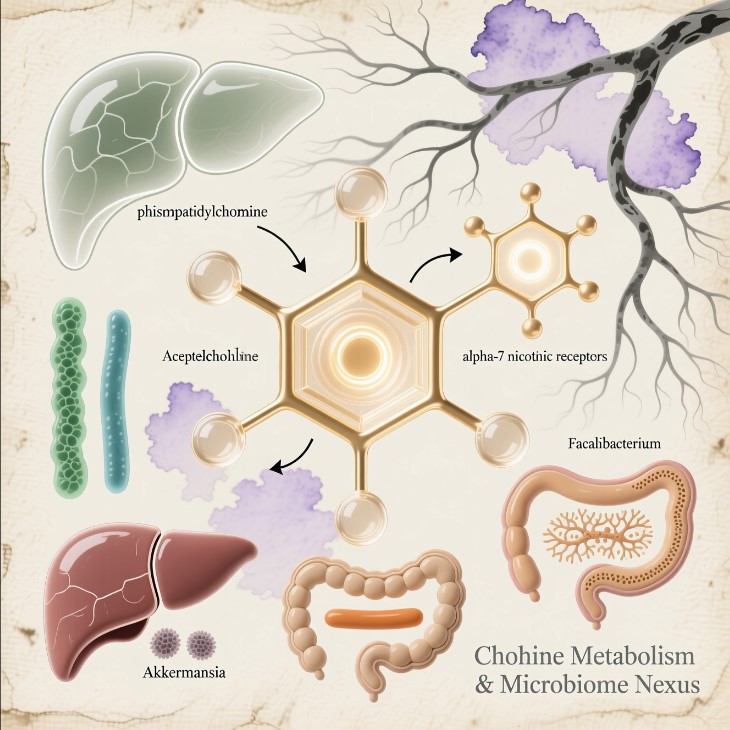
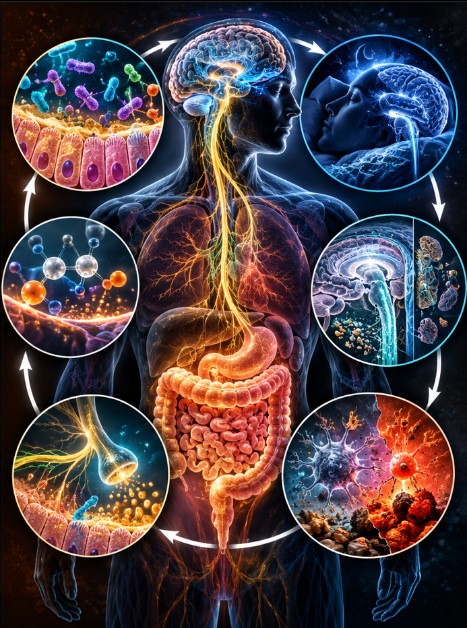
The TCVG framework examines a proposed set of relationships linking intestinal microbial ecology, choline-related metabolism, autonomic and vagal signalling, and brain-fluid clearance processes.
The microbial component, termed the Love Trio in this work, focuses on Akkermansia muciniphila, Faecalibacterium prausnitzii, and Roseburia species. These organisms are of interest because of their differing roles in mucus-associated ecology, fermentation, and short-chain fatty acid production.
The framework then considers possible connections with choline-dependent membrane and signalling pathways, vagal regulation, sleep-related physiology, and glymphatic and meningeal lymphatic clearance.
The proposed relationships are biologically motivated, but the full TCVG cycle has not been established as a single causal chain. Individual links have different levels of evidence, and a plausible connection between two systems does not prove that every downstream consequence follows.
Its relevance to SBS is that it provides a specific example of how several biological domains might be investigated as an interconnected system rather than as unrelated specialties.
BIC and TCVG are not synonyms for SBS. They are tools for examining potential architecture within and around the proposed state.
9. Different routes, potentially convergent states
One of the most important implications of SBS is that similar functional states need not have identical origins.
Individuals may have different genetic backgrounds, developmental histories, microbial ecologies, exposures, nutritional circumstances, infections, inflammatory episodes, or other initiating disturbances.
The hypothesis does not require those histories to be interchangeable.
It asks whether some of their effects can converge on a smaller set of altered physiological functions.
This is a familiar possibility in complex systems: different inputs can produce similar outputs when they constrain the same downstream processes. Conversely, similar initiating disturbances can produce different outcomes depending on the starting conditions and compensatory capacity of the individual.
The resulting state may therefore vary in severity, composition, and clinical expression.
One individual may show predominantly intestinal symptoms. Another may show metabolic abnormalities. Another may have neurological or autonomic manifestations. Another may recover without developing a persistent condition.
The SBS hypothesis does not assume that these individuals have the same disease. It proposes that examining their functional states may reveal shared constraints that conventional disease categories do not fully capture.
Nor does it imply that all disease belongs to SBS. Many conditions have direct, well-established causes that remain essential to their explanation. The hypothesis is most relevant where multiple interacting abnormalities, persistent dysfunction, or incomplete recovery suggest that the organism’s wider operating state may contribute to the clinical picture.
It is a framework for identifying possible convergence, not a reason to disregard established causes.
10. Why the current chronic-disease environment matters
SBS is not proposed as a universal explanation for every disease across human history.
The hypothesis is particularly concerned with whether modern patterns of chronic dysfunction may be influenced by environmental and ecological conditions that alter the way biological systems develop, adapt, and recover.
The human organism develops in an environment. Microbial exposure, nutrition, maternal physiology, infections, medications, sleep, physical activity, and other influences can affect different aspects of biological function. Their effects depend on timing, dose, context, individual susceptibility, and interactions with other conditions.
It is therefore reasonable to investigate whether changes in the broader environment can influence the frequency with which certain altered functional states arise.
This is not equivalent to claiming that any single exposure explains a modern disease trend. Temporal association alone does not establish causation, and environmental factors can differ substantially in their effects.
The SBS hypothesis instead asks a broader question: might multiple environmental and developmental influences converge on shared physiological constraints, helping to explain why some forms of chronic dysfunction involve overlapping metabolic, inflammatory, microbial, and regulatory patterns?
If that proposition is supported, prevention and recovery research could benefit from examining the conditions that preserve normal biological flexibility, not merely the removal of one isolated trigger.
It would also follow that SBS need not remain equally relevant under all future conditions. If the environmental factors contributing to a particular altered state become less prevalent, the importance of that state as an explanation for contemporary disease patterns could diminish.
That possibility is consistent with a state-level framework. It does not require SBS to be an immutable feature of human biology.
11. What SBS predicts—and how it can be tested
A useful hypothesis must do more than accommodate observations after they occur. It should generate predictions that could distinguish it from competing explanations.
The SBS hypothesis generates several testable propositions.
Prediction 1: Multiple abnormalities may be explained by shared functional constraints.
In some individuals, a group of apparently separate biomarkers should be better explained by a combination of shared upstream processes and pathway-specific disturbances than by treating every abnormality as fully independent.
This can be tested by comparing models of the same dataset and assessing their explanatory performance.
Prediction 2: Total abundance and functional availability may diverge.
In relevant pathways, measurements of total nutrient or metabolite concentration may not adequately predict uptake, compartment-specific availability, utilisation, or functional output.
Studies should measure these variables separately where feasible.
Prediction 3: Different initiating disturbances may produce overlapping functional profiles.
Individuals with different histories may display similar patterns of constrained routing, recovery, or clearance. This should be assessed using defined functional measurements rather than resemblance based only on symptoms.
Prediction 4: The state may predict outcomes beyond the initiating event.
If SBS is an important explanatory level, measurements of the functional state should sometimes help predict persistence, recovery, or response to an intervention beyond what can be predicted from the initial disturbance alone.
Longitudinal studies are especially important here.
Prediction 5: Restoring a specific component may not always restore the entire system.
If several interacting constraints contribute to a persistent state, correcting one component may improve a local function without normalising all downstream abnormalities. In other cases, correcting a dominant bottleneck may produce wider improvements. The model predicts neither universal treatment failure nor universal multi-system recovery; it predicts that outcomes will depend on the structure and severity of the constraints.
Prediction 6: Persistent states should have identifiable maintenance mechanisms.
Where SBS progresses into a Regulatory Lock, there should be evidence of mechanisms that sustain the altered state after the initiating disturbance has diminished or disappeared. Such mechanisms must be identified and tested rather than assumed.
Prediction 7: The framework should improve with explicit measurement and comparison.
The model should help researchers identify which additional measurements are needed to distinguish increased production from impaired utilisation, altered routing, inadequate recycling, or changed clearance.
If SBS cannot generate useful predictions, improve explanation, or be distinguished from competing models, its explanatory value would be weakened.
If it repeatedly predicts measurable relationships across independent datasets and populations, its value would increase.
These are the standards by which the hypothesis should be judged.
12. What would count as evidence against the hypothesis?
A framework that explains every possible outcome explains too little.
SBS must therefore remain open to findings that contradict its proposed relationships.
If apparently shared abnormalities consistently arise through independent mechanisms with no useful common state-level explanation, the proposed convergence may be overstated.
If the measured functional state adds no predictive value beyond established diagnoses and individual biomarkers, its practical usefulness may be limited.
If the proposed relationships disappear when confounding variables, measurement error, or alternative explanations are addressed, the relevant claims should be revised.
If an apparent shared pattern results primarily from selecting examples that resemble one another, rather than from independent and reproducible evidence, it should not be treated as confirmation.
Finally, a state-level model must not be used to obscure direct causes that are already established or to justify interventions that have not been shown to be safe and effective.
These are not objections external to the hypothesis. They are part of the research programme required to develop it responsibly.
The goal is not to protect SBS from criticism. The goal is to make its central proposition sufficiently precise that criticism can improve it or demonstrate where it fails.
13. The significance of the hypothesis
The most important contribution of SBS may be a change in the level at which biological questions are asked.
Much of medicine necessarily focuses on individual diseases, organs, pathways, and measurable abnormalities. This has produced extraordinary advances. But an organism does not experience its biology as a collection of independent laboratory results.
Its systems operate simultaneously, exchange resources, respond to one another, compensate for disturbances, and depend on processes of maintenance and recovery.
A change in one part of this architecture may alter the conditions under which another part functions. The resulting clinical picture may therefore contain several abnormalities whose relationships are not apparent when each is considered separately.
SBS proposes that the altered configuration itself may be worthy of measurement and explanation.
This does not replace molecular mechanisms. It gives them a possible higher-order context.
It does not replace individual diagnoses. It asks whether an additional description of the organism’s functional state can explain variation within and across those diagnoses.
It does not assume one cause. It asks whether different causes can converge on shared constraints.
It does not assume that every abnormality belongs to one system. It asks whether some apparent independence is misleading because the relevant pathways participate in a wider functional network.
And it does not assume that every persistent condition is irreversible. It asks what determines whether the organism can recover, compensate successfully, or remain in an altered configuration.
The resulting research agenda is interdisciplinary by necessity. It requires molecular biology, microbial ecology, physiology, metabolic analysis, longitudinal measurement, and rigorous comparison between competing explanations.
It also requires a distinction between a plausible systems architecture and a demonstrated causal mechanism. The former can guide investigation; the latter must be established through evidence appropriate to the specific claim.
14. Conclusion: the state is part of the explanation
The Secondary Biological State hypothesis arose from a repeated encounter with the same question across different areas of biology.
Why can a resource be present yet functionally inaccessible? Why can a pathway retain its components yet operate differently? Why can multiple downstream measurements change when the initiating disturbance is not located in each of the systems those measurements represent? Why can compensation preserve immediate function without restoring the conditions required for recovery?
The individual answers differ. The underlying mechanisms are not interchangeable. Yet these questions point toward a common investigative problem: biological function depends not only on what components exist, but also on the state of the system in which they operate.
SBS proposes that, under some circumstances, this system-level state becomes a significant contributor to persistent dysfunction.
The organism may enter a configuration in which altered resource handling, regulation, recovery, and clearance reinforce one another. Different pathways may express the resulting constraints differently, and different initiating histories may lead to overlapping functional outcomes.
The hypothesis does not claim that this has already been proven for every disease, every pathway, or every person. It claims that the repeated convergence of mechanistic questions across independent biological domains justifies investigating the possibility systematically.
The next step is not to assume the answer. Nor is it to restart the inquiry with every pathway treated as though it had no relationship to the others.
The next step is to define the proposed state, measure its components, determine where independent evidence converges, identify where the model makes incorrect predictions, and test whether the state explains or predicts outcomes that individual measurements cannot adequately explain on their own.
That is the purpose of SBS.
The central question is no longer only what has gone wrong in a particular biological pathway. It is also whether the conditions governing that pathway have changed—and whether that change is part of a wider state of biological function.
If the answer is yes in a meaningful subset of chronic conditions, then understanding the disease may require understanding not only the original disturbance, but also the altered state through which the organism continues to operate.
A hypothesis Phillip proposed as the basis for further investigation.?